Places
St Michael's Mount vs Mont-Saint-Michel: How the Two Mounts Compare
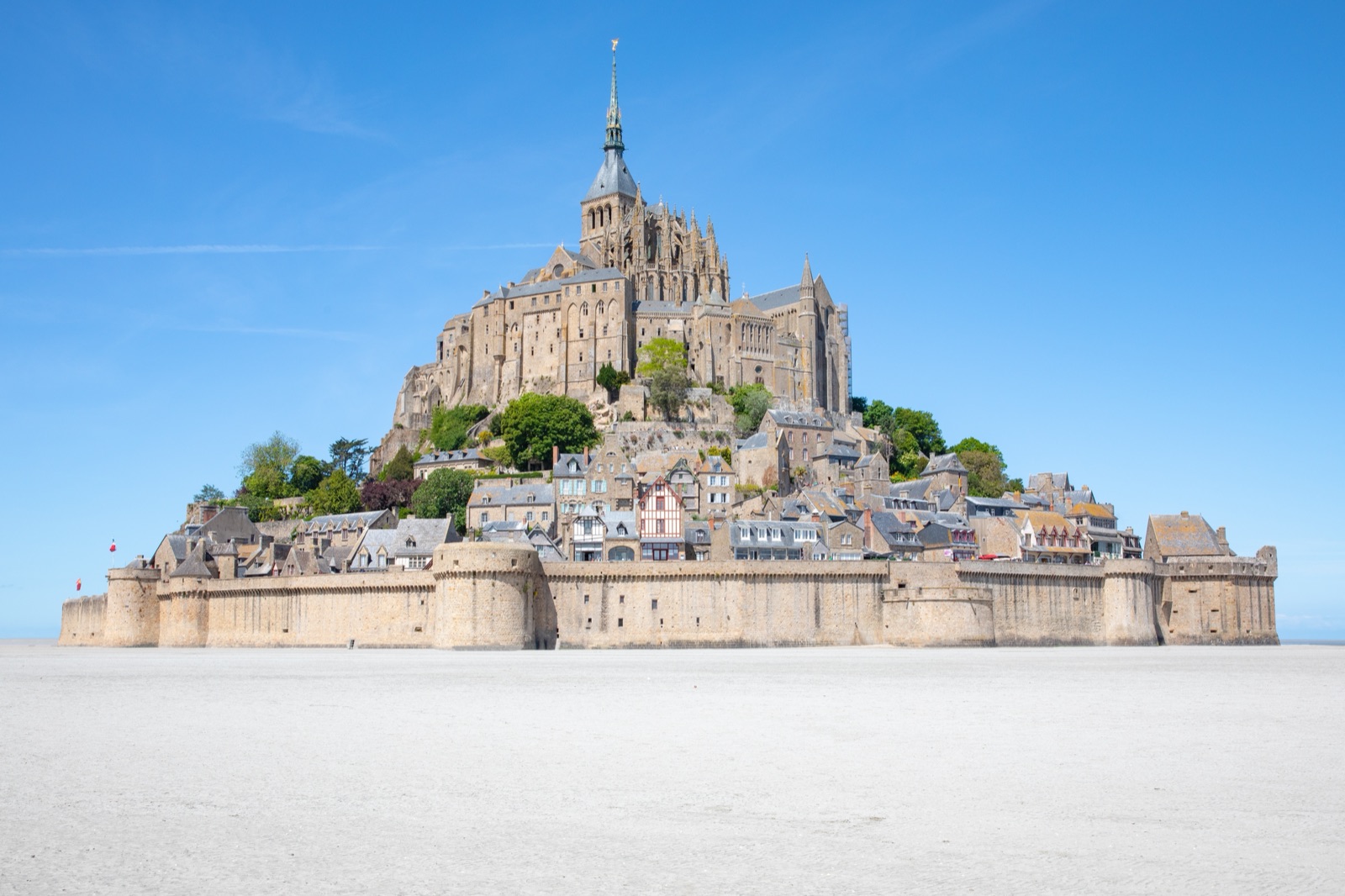
St Michael’s Mount and Mont-Saint-Michel are two different tidal islands on opposite sides of the English Channel, both dedicated to the archangel Michael. St Michael’s Mount is in Cornwall, off the town of Marazion in Mount’s Bay, crowned by a medieval church and a castle that is still the St Aubyn family’s home. Mont-Saint-Michel is in Normandy, in north-west France, crowned by a Benedictine abbey above a walled village. There is no Mont-Saint-Michel in Cornwall: the Cornish one is St Michael’s Mount.
They are related, though. By the time of the Norman Conquest in 1066, the Cornish island belonged to the Benedictine abbey of Mont-Saint-Michel, and its church and priory were begun in 1135. Today the two are very different visits: the Cornish mount is a small island reached on foot over a cobbled causeway at low tide or by boat when the tide is in, while the Norman one is reached all year by a bridge and shuttle and draws millions of visitors a year. This article sets them side by side, from the shared history to the practical details of tides, tickets and getting there from the UK.
At a glance
| St Michael’s Mount | Mont-Saint-Michel | |
|---|---|---|
| Where | Mount’s Bay, off Marazion, Cornwall, England | Bay of Mont-Saint-Michel, Normandy, France |
| On the summit | Medieval church and castle, a family home | Benedictine abbey church and the Gothic Merveille |
| Looked after by | The National Trust and the St Aubyn family | The Centre des monuments nationaux (abbey); the village is a commune |
| Getting across | Cobbled causeway at low tide, boat at high tide | Bridge-walkway all year, with a free shuttle from the car park |
| Residents | About 30 islanders | 23 in the commune (INSEE, 2023), plus about a dozen monks and nuns |
| Main ticket | Castle: £21, or £18 booked in advance | Abbey: €16 from April to September 2026, €13 from October 2026 to March 2027 |
| Closed | Saturdays (castle and island) | Abbey closed on 1 January, 1 May and 25 December |
Is there a Mont-Saint-Michel in Cornwall?
No. The confusion is common, and understandable: the names mean the same thing, the shapes are alike and both rise from a tidal bay. The Cornish island’s own name is St Michael’s Mount, and it lies in Mount’s Bay near Penzance. Mont-Saint-Michel, with the hyphenated French name, is in Normandy.
The resemblance is often pointed out: St Michael’s Mount is described as the historical English counterpart of Mont-Saint-Michel, with a similar conical shape, though Mont-Saint-Michel is much taller. Its abbey church rises to 80 m at the top of the rock.
How the two mounts are linked
The connection is not a coincidence of names. It is a story of property and monks.
- Before 1066. The St Michael’s Mount site says that by the time of the Norman Conquest in 1066, the island had come into the possession of the Benedictine abbey of Mont-Saint-Michel. A carved king on the church’s fifteenth-century lantern cross may be Edward the Confessor, “who by some accounts gave the Mount to Mont-St-Michel”, in the island’s careful phrasing.
- 1135. Construction began on the church and priory buildings at the summit of the Cornish island. The present church stands on the footprint of that building and was largely rebuilt in the late fourteenth century.
- The end of the link. The Cornish house remained a priory of Mont-Saint-Michel until Henry V, at war with France, dissolved the “alien” priories that belonged to French abbeys. Reduced to a secular chapel, it was given to the Abbess and Convent of Syon at Isleworth, which ended its association with the Norman abbey.
So for several centuries St Michael’s Mount was, in effect, a Cornish outpost of the abbey you can still visit in Normandy. Our article on Mont-Saint-Michel’s history tells the Norman side of that story, from the first sanctuary to the present day.
Two legends of Saint Michael
Both islands have a story of the archangel appearing, and both stories drew pilgrims across the sands.
On St Michael’s Mount, the island’s own history says tales going back to AD 495 tell of seafarers guided to safety by an apparition of St Michael, said to have appeared on the western side of the island. Michael is described there as patron saint of fishermen, and the legend drew pilgrims, monks and people of faith to the island for centuries.
Mont-Saint-Michel’s founding story is later and more specific. According to legend, in 708 the archangel appeared three times in a dream to Aubert, bishop of Avranches, and asked him to build a sanctuary on the rock then called Mont Tombe. Benedictine monks settled there in 966.
Cornwall adds a folk tale of its own: the legend of Jack the Giant Killer. The giant Cormoran was said to have made the Mount his home, stealing cattle from the mainland, until Jack, a boy from Marazion, crossed the causeway on a moonlit night and dealt with him.
What stands on each summit
St Michael’s Mount: church, castle and a family home
The summit of the Cornish mount carries the Church of St Michael and All Angels and the castle that grew around the old priory. The castle’s story runs from priory to fortified castle and then, since the mid-1600s, to a home for the St Aubyn family, who still live there. John St Aubyn, a parliamentary colonel, was made Captain of the Mount after the Civil War and later bought the island. In 1954 Francis St Aubyn, the third Lord St Levan, gave most of the island to the National Trust with an endowment for its upkeep. The family keeps the right to live in the castle and runs the visitor business under licence from the Trust.
Below the castle are terraced gardens of succulents and subtropical plants, which the gardeners tend on ropes: the National Trust describes a cliff-face garden hanging up to 50 metres above the sea. The island’s site says the garden was built in 1887 for a family of 11; another passage on the same page says it was designed in 1878.
Mont-Saint-Michel: an abbey and a village
The Norman summit carries a much larger monastic complex. The Romanesque abbey church, begun by tradition in 1023, sits on four crypts built around the tip of the rock. On the north face stands the Merveille, the Gothic monastery begun in 1204, topped by a cloister open to the sky. Below the abbey, a village of houses, shops and inns climbs the rock inside its ramparts. Our guide to visiting the abbey covers what you see inside.
Fortresses on both sides
Both mounts were military positions as well as holy places, which is why both look like castles from the shore.
On St Michael’s Mount, Henry de la Pomeroy seized and fortified the island in 1193, and the Earl of Oxford held it during the Wars of the Roses. Royalists held out there in the Civil War, cannons on the battlements once drove a Napoleonic ship to capture on Marazion beach, and the first of the chain of beacons that warned London of the Spanish Armada was lit on top of the church tower.
Mont-Saint-Michel’s defining war was the Hundred Years’ War. The English besieged it from 1423, but it came out victorious in 1434 and became a symbol of French resistance. Its reputation as an impregnable fortress, and much of its ramparts, date from that war.
Getting across: causeway or bridge
This is where the two differ most for a visitor.
St Michael’s Mount: walk at low tide, boat at high tide
- The causeway is cobbled, uneven and open for around four hours a day, depending on the tides and weather. It takes around 15 minutes to walk.
- The boats run between 15 March and 31 October, when the causeway is covered. The crossing takes around five minutes and the one-way fare is £3.20 for adults (National Trust members included) and £1.60 for under-16s. Boats leave from one of three landings in Marazion, Chapel Rock, Gwelva or Top Tieb, depending on the height of the tide.
- In winter there are no boats, so the causeway is the only way across, and the island opens only when it is uncovered.
The island warns that crossing the causeway outside the suggested times can be hazardous: the path is uneven, currents can be strong and the sea rises quickly. Check the access calendar on the St Michael’s Mount site before you set off.
Mont-Saint-Michel: a bridge all year, an island for an hour
- The bridge-walkway, opened in 2014 to replace the old causeway, gives access all year round.
- The car park is on the mainland, 2.5 km from the entrance. The free Passeur shuttle runs about every 15 minutes, or you can walk it in about 40 minutes.
- At the biggest tides the sea covers the esplanade between the bridge and the village gate, and the Mont becomes an island again for about an hour. Visitors simply wait for the water to drop.
The Norman bay is famous for its tides. The tourist office says the bay has the highest tides in continental Europe, with up to 15 metres between low and high water, and that at big tides the sea withdraws 15 kilometres from the shore. Walking out on the sands alone is extremely dangerous, even close to the Mont; guided outings run all year, though in winter only the shorter ones go out. Our guide to tides and bay walks covers tide times and the guided walks, and our guide to getting to Mont-Saint-Michel covers the car parks and the shuttle.
Who lives there
Both islands are tiny communities that receive far more visitors than they have residents.
About 30 people live on St Michael’s Mount throughout the year, and at least one person in each household works in looking after the Mount. In the early 1800s the village was home to over 300 islanders, with 53 houses and four streets.
Mont-Saint-Michel’s commune had 23 residents in INSEE’s 2023 census; the tourist office counts a little under twenty Montois, plus a small community of cats. About a dozen monks and nuns of the Monastic Fraternities of Jerusalem live in the abbey. In the Middle Ages the rock was home to about 400 people.
The visitor numbers are on a different scale in Normandy. The tourist office says Mont-Saint-Michel welcomes nearly 2.5 million visitors and pilgrims a year, and UNESCO’s page speaks of three million.
Opening times and what a visit costs
The details below come from each site’s pages in October 2026. Prices and seasons change, so check before you go.
St Michael’s Mount
- Island: open Sunday to Friday, 9:45 to 17:00, closed on Saturdays; last entry onto the island is 15:45. The castle closes for the season on 30 October 2026. From 1 November the island opens when the causeway is uncovered.
- Castle: £21 for an adult, or £18 at the advance booking rate; under-5s go free. The castle is closed on Saturdays so that the family can enjoy their home privately.
- Garden: in 2026 it opened Monday to Friday, 10:00 to 15:45, from 1 May to 4 September.
- Free access: in the 2026 autumn season, 13 September to 30 October, the harbour, village, shops, cafés and gallery are free; the castle is for ticket holders only.
- Booking: the National Trust advises booking castle and garden tickets before you visit, directly with St Michael’s Mount. National Trust members still pay for boats and parking.
Mont-Saint-Michel
- Village: a commune, free to enter at any time without a ticket.
- Abbey: €16 from 1 April to 30 September 2026 and €13 from 1 October 2026 to 31 March 2027. Entry is free for under-18s visiting as a family, and for EU citizens and regular residents of France aged 18–25.
- Hours: 9am to 7pm from 1 May to 31 August; 9:30am to 6pm from 1 September to 30 April. Closed on 1 January, 1 May and 25 December, with last entry an hour before closing.
- Effort: there are about 350 steps from the foot of the Grande Rue to the top of the abbey.
The best time of year for each
The two mounts follow different calendars, so the season can decide the trip for you.
- St Michael’s Mount in spring and summer: the boats run from 15 March to 31 October, so you can reach the island whatever the tide, and the garden opens on weekdays from May to early September. This is also when access to the harbour and village is by ticket for most people.
- St Michael’s Mount in autumn and winter: in the autumn season the harbour and village are free, but the garden is closed. Once the boats stop, the island opens only when the causeway is uncovered, so the tide decides your hours.
- Mont-Saint-Michel in summer: the abbey stays open until 7pm from May to August, but this is when the crowds are biggest.
- Mont-Saint-Michel from October to March: the abbey ticket drops to €13 and closes at 6pm. The bridge stays open all year, so the visit itself does not depend on the season; the biggest tides do, and our tides guide explains when they come.
Getting there from the UK
St Michael’s Mount is a straightforward day out in west Cornwall. The nearest railway station is Penzance, about 3 miles away, and the National Trust lists bus routes from Penzance towards Helston and St Ives. Parking is in the Mount’s own car parks in Marazion, which are not National Trust car parks.
Mont-Saint-Michel is a ferry or flight away. From Saint-Malo, Brittany Ferries sails to Portsmouth and Condor Ferries links Poole via Jersey or Guernsey; Caen-Carpiquet airport, 130 km from the Mont, has direct flights to London. A Brittany Ferries boarding pass cuts the abbey ticket to €13 between 1 April and 30 September 2026 and to €11.50 from 1 October 2026 to 31 March 2027. Our article on where Mont-Saint-Michel is sets out the ports, airports and towns around the bay.
Which one should you visit?
They are not really rivals, because most people choose by geography. Still, if you are weighing a trip:
- Choose St Michael’s Mount for a half-day in Cornwall, a castle that is still a lived-in family home, a subtropical garden and the fun of timing a walk across the causeway. Plan around the tide and remember the Saturday closure.
- Choose Mont-Saint-Michel for one of the great monuments of medieval Europe: a UNESCO World Heritage abbey on a rock in a vast tidal bay, with a village to explore and the option of a guided walk across the sands. Allow at least half a day, and a full day if you add a guided walk on the bay.
- Do both if you can: they make a neat pair, two islands of the same archangel that were once tied together by the same community of Benedictine monks.
If you would rather see the Norman mount with transport or a guide arranged, our tours page lists day trips from Paris, abbey tickets and guided bay walks.
Frequently asked questions
Are St Michael’s Mount and Mont-Saint-Michel related?
Yes. By the Norman Conquest in 1066 the Cornish island belonged to the Benedictine abbey of Mont-Saint-Michel, and a priory was built there from 1135. The link ended when Henry V dissolved the priories owned by French abbeys and the chapel passed to Syon Abbey.
Is there a Mont-Saint-Michel in Cornwall or England?
No. The Cornish island is St Michael’s Mount, off Marazion in Mount’s Bay. Mont-Saint-Michel is in Normandy, in north-west France.
Which is bigger, St Michael’s Mount or Mont-Saint-Michel?
Mont-Saint-Michel is the taller and much busier of the two, with its abbey church at 80 m and nearly 2.5 million visitors a year according to the tourist office. St Michael’s Mount has a similar conical shape on a smaller scale.
Can you walk to both islands?
Yes, but differently. At St Michael’s Mount you walk the cobbled causeway at low tide, for around four hours a day, and take a boat when it is covered. At Mont-Saint-Michel a bridge-walkway gives access all year, except for about an hour at the biggest tides.
Which is cheaper to visit?
Walking around either village can cost nothing: Mont-Saint-Michel’s village is always free, and St Michael’s Mount’s harbour and village are free in the autumn season. Inside, the Norman abbey ticket is €16 or €13 depending on the season, against £21 for the Cornish castle (£18 booked in advance).